Old River Bed Site of Special Scientific Interest
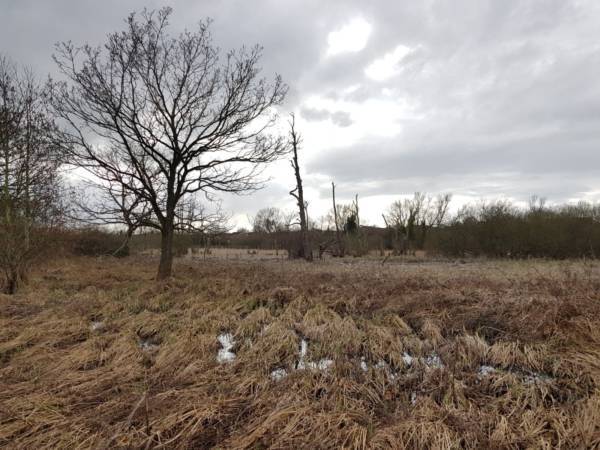
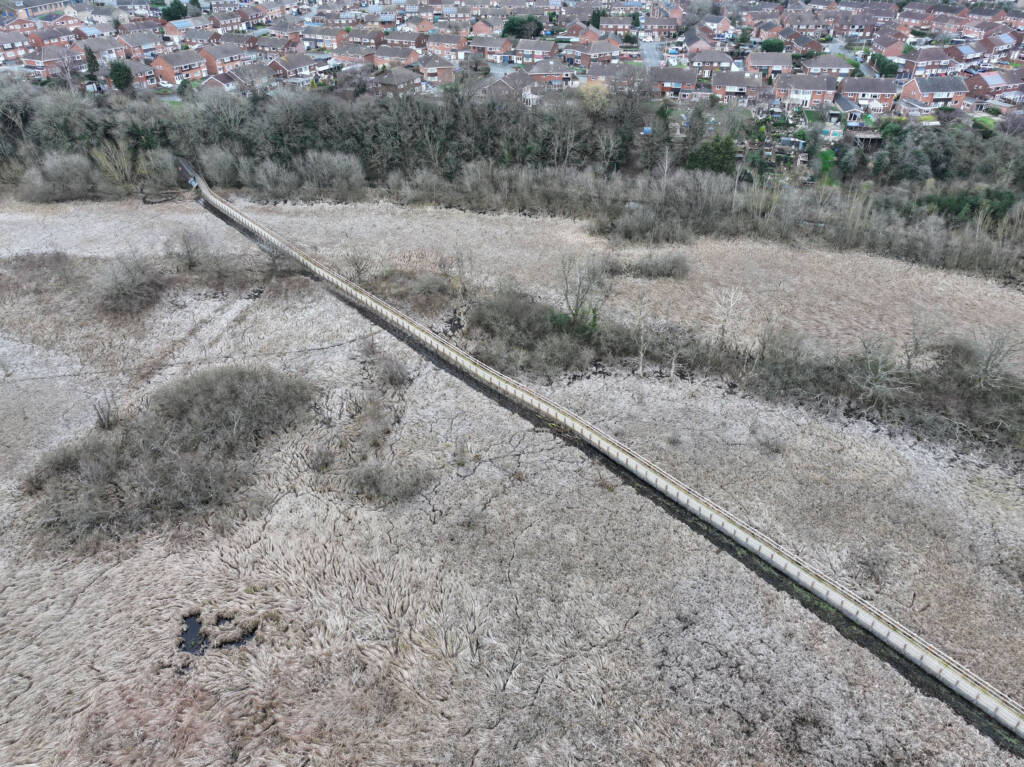
The Old River Bed is the Countryside Team’s 2nd largest site at 18Ha. It is a Site of Special Scientific Interest (SSSI). The site is classed as a fen wetland and it is this habitat that has gained the site its designation due to its regional and national rarity.
Habitat
The majority of the site is a fen wetland. Woodland covers much of the steep bank on the east. An area of annual wildflowers is sown each autumn on the corner of Hubert Way and Ellesmere Road. There is also an important hedgerow which screens the site from Hubert way and runs the entire length of the road (over 900metres).
Wildlife
The Old River Bed SSSI is a nationally important wetland and now plays a central role in the Shropshire Beaver Project, delivered in partnership with Shropshire Wildlife Trust.
In February 2025, Eurasian beavers were successfully released into the Old River Bed SSSI as part of this landmark nature restoration initiative. The project uses the beavers’ natural behaviours to enhance biodiversity, restore wetland processes and create a dynamic mosaic of habitats across the site.
In a remarkable milestone for Shropshire, the beavers welcomed a kit later in 2025 — the first beaver born in the county in over 400 years. The arrival of the kit is a powerful sign that the animals are thriving and settling successfully into their new home.
Most of the Old River Bed is dominated by lesser pond-sedge. Other areas are characterised by common reed, great reedmace and water horsetail. Meadowsweet, soft rush and sharp-flowered rush are abundant, while water sedge, bottle sedge, brown sedge and marsh cinquefoil are found less frequently.
The site supports a rich variety of wildlife. Reed Bunting, Sedge Warbler and Water Rail have all been recorded here, and the extensive wet habitat makes it an important refuge for amphibians and invertebrates. Eels are found in abundance in the ditches during winter months.
Historically, management has focused on preventing trees such as willow and alder from encroaching and drying out the wetland. Large grazing animals, including longhorn cattle, have previously been introduced but had only limited impact on tree growth.
The introduction of Eurasian beavers marks an exciting new chapter in the site’s management. By naturally coppicing trees, building dams and retaining water, the beavers are helping to create a patchwork of open water, wet woodland and reedbed habitat — increasing resilience, boosting biodiversity and restoring the natural character of this unique Shropshire landscape.
History
It is part of the former bed of the River Severn, which has been cut off from the main course of the river since the last glaciation. The wetland continues around to the west, towards the West Midlands Showground.
How to get there
The Old River Bed lies in a cut off section of the old route of the River Severn, in north Shrewsbury. It extends from the Ellesmere Road at its northern end, to the footpath to Greenfields in the south. Hubert Way runs along the western edge, and the steep bank down from Mount Pleasant estate runs along the west.
Access
There is no public access to the riverbed itself due to the delicate nature of the site and the dangers of the deep, soft bottomed wetland. However there is a path along the top of the Old River Bed between Ellesmere Road and Onslow Drive. The whole site can be walked along Hubert Way from the junction with Ellesmere Road and Greenfield recreation ground.
Car parking
The site is only accessible on foot so please be courteous to local residents if parking on the nearby roads.
Grid reference
The grid reference for the centre of the site is SJ 497 145
Postcode
The closest post code to Hubert Way is Butterwick Drive SY1 3XE